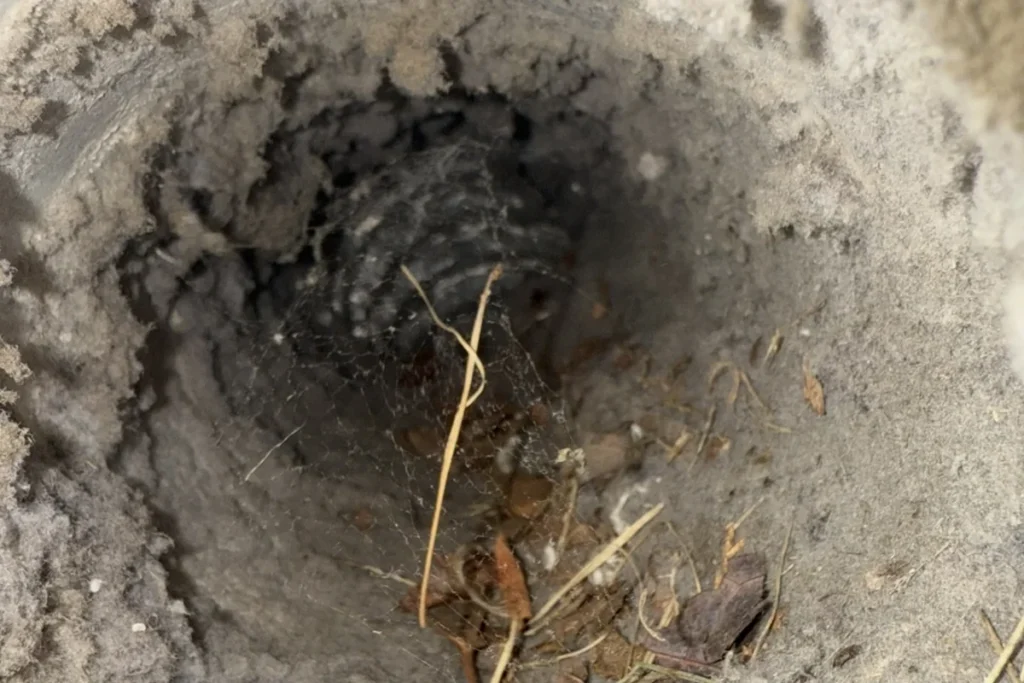
By Joe and Mike, Easy Breezy Air Duct & Chimney Services
The towels went in after dinner, and at ten o’clock they’re still damp. You run another 40 minutes on high, they’re still damp, and now you’re pricing new dryers on your phone.
Hold off for a minute. The signs your dryer vent is clogged look a lot like a dying dryer, but it’s a different problem with a different fix. When lint packs the duct, the hot, wet air can’t leave, and the machine just keeps tumbling.
We clean and fix dryer vents across Maryland, DC and Northern Virginia. These are the checks we’d make first, and most of them take a minute or two.
Your clothes take longer to dry, or come out damp
If jeans that used to dry in one cycle now need two, start here.
The Consumer Product Safety Commission is direct about it. Clothing that’s “still damp at the end of a typical drying cycle,” or drying that “requires longer times than normal,” “may be a sign that the lint screen or the exhaust duct is blocked.”
Heat pulls the water out of the fabric, and that water is supposed to ride the air out the side of the house. When the duct is choked, the wet air stays in the drum with your jeans.
Pull the lint screen first. If it’s clean, the duct is the next suspect.
Little or no air comes out the outside vent
This check takes about ten seconds.
Turn the dryer on, walk outside and find the hood on the wall, which may be behind the azaleas or up near the deck. Hold your hand under it. You should feel warm air pushing against your palm and see the flap swung open. A faint breath, or nothing at all, is a bad sign.
CPSC says the same thing: “Check the outside dryer vent while the dryer is operating to make sure exhaust air is escaping. If it is not, the vent or the exhaust duct may be blocked.”
You don’t need any tools for this, and it’s about the clearest sign you’ll get.
The outside flap sticks or has lint around it
While you’re standing at the hood, look at the flap itself.
It should be open while the dryer runs and drop shut when it stops. NFPA’s dryer safety tips say to make sure the outdoor flap opens with the dryer on and isn’t buried in snow. After a big snow overnight, it’s worth walking out to check before the first load.
Gray fuzz around the edges, or a flap stuck half open, means air is being held back.
Look for a screen as well. Someone may have put one over the hood years ago to keep birds out, and lint catches on it right at the exit, so the whole run backs up behind it.
The dryer or your clothes run hot
Near the end of a load, put your hand flat on top of the machine, then pull out a towel. If either one is hotter than it should be, the heat has nowhere to go, so it stays in the drum and the cabinet.
You smell something burning
Stop the dryer. Leave it off until the vent and the dryer itself have both been checked, because the cause can be electrical or mechanical as well as lint. If you see smoke or flames, get everyone out and call 911.
Why a clogged vent is worth fixing now
Lint burns.
NFPA looked at home dryer fires from 2014 to 2018, and “failure to clean” played a part in about a third of them. A lot about a dryer is out of your hands, but that part isn’t.
The smaller, everyday reason is that a choked vent makes every load take longer and turns the laundry room into a hot box.
When it’s more than lint
Some vents can’t be cleaned back to working, and cleaning them only buys a few weeks. These are the problems we look for:
- Plastic or foil accordion hose behind the dryer. CPSC says to swap it for rigid or corrugated semi-rigid metal, because flexible plastic or foil “can more easily trap lint and is more susceptible to kinks or crushing.”
- A hose mashed flat against the wall after the dryer was pushed back.
- A joint that has come apart inside a ceiling or wall, so lint drops where nobody is looking.
- A run that’s too long. The install manual lists a length limit, and if the run goes past it or stacks up elbows, a cleaning won’t fix it.
Any of those is a job for dryer vent repair and installation.
What to do about signs of a clogged dryer vent
Start with the lint screen, then do the hand test under the hood outside.
If drying is still slow after both, or nobody in the house remembers when the vent was last cleaned, have someone look at it. Our dryer vent cleaning is a short visit. If timing is your real question, we wrote a separate piece on when to clean your dryer vent.
Nobody will push you to add anything.
Clogged dryer vent FAQ
What are clogged dryer vent symptoms?
CPSC lists two: clothes that take longer than normal or come out damp, and little or no air at the outside vent while the dryer runs. A stuck flap, a dryer running unusually hot or a burning smell are also reasons to stop and check.
How do I know if my dryer vent is clogged?
Run the dryer and go feel the outside vent. Weak air or none, plus loads that take longer than they used to, points to a blockage.
Why does my dryer take so long to dry?
First suspect is the vent: clogged, crushed or disconnected. If the vent’s clear and the dryer is still slow, the dryer itself may need service.
Can a clogged dryer vent cause a fire?
It can. Lint burns, and failure to clean is a known factor in home dryer fires.
Talk to Easy Breezy
Tell us if the air is weak at the hood, or if a towel won’t dry. Easy Breezy Air Duct & Chimney Services cleans and repairs dryer vents across Maryland, DC and Northern Virginia.
Call 240-641-0770 for a free estimate.