By Joe and Mike, Easy Breezy Air Duct & Chimney Services
How often should you clean your dryer vent? It’s a fair question, and the first thing we’d ask back is when it was last done. If you draw a blank, that makes sense, because nobody ever sees that pipe.
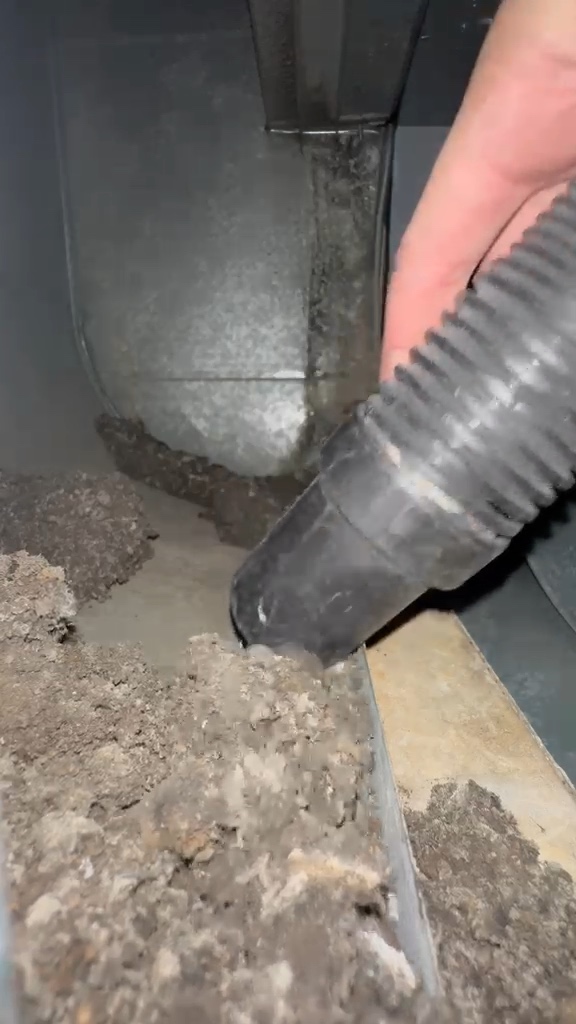
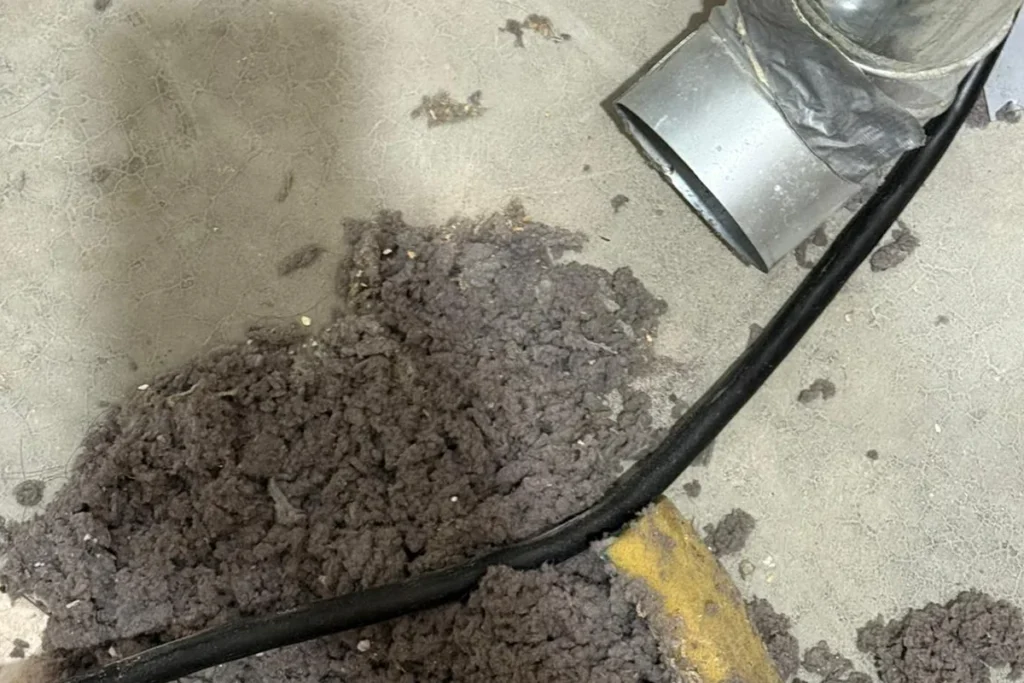
We don’t mean the lint screen, which you pull every load. We mean the duct behind the dryer, the one that goes into the wall and comes out somewhere on the side of the house, maybe by the AC unit or under the deck. Lint settles in it a little at a time, the loads get a little slower, and an extra five minutes here and there doesn’t feel like a problem until it’s twenty.
We clean dryer vents across Maryland, DC and Northern Virginia, along with ducts and chimneys.
The short answer: go by the signs, not the calendar
A calendar can’t see inside your vent.
Picture two houses on the same street. In the first, four kids keep the dryer going almost every evening, and the duct winds across the basement ceiling with four turns. In the second, a retired couple runs two loads a week, and the vent goes straight out the back wall. Giving both houses the same date wouldn’t make sense.
So watch the dryer instead. If loads are dragging, if lint is collecting around the outside flap, or if you honestly don’t know when it was last cleaned, any one of those is reason enough. The CPSC treats drying that “requires longer times than normal” as a sign the lint screen or exhaust duct may be blocked.
If your dryer’s manual says something specific about the vent, go with the manual.
The lint screen and the vent are two different jobs
They sound like the same chore, but they cover different parts.
- Clean the lint screen after every load, never run the dryer without it, and wipe out the lint around the drum opening while you’re there.
- Clean the vent when drying slows down or when nobody can remember the last time. Some lint always gets past the screen, and once it’s in the duct, the screen can’t reach it.
A clean screen with a packed duct still leaves you with damp towels.
Homes where vents fill up faster
A fixed schedule misses the things that make one vent fill faster than another:
- More laundry sends more lint down the pipe.
- Long runs with several elbows fill faster. Think of a dryer in a second floor hall closet, or one in the middle of a split-level basement. The install manual lists a length limit, and the closer a run sits to that number, the less lint it takes to choke it.
- An exit you can’t see easily, like a hood high up a wall or tucked behind deck lattice, can collect lint for a long time before anyone notices.
- Plastic or foil accordion hose behind the dryer traps lint more easily than metal (CPSC).
That plastic or foil hose should be replaced no matter what your schedule looks like. Our dryer vent repair and installation page covers the swap.
Signs it’s time, whatever the date
CPSC names two warning signs of a blocked vent:
- Clothes take longer than normal to dry, or come out damp.
- With the dryer on, you hold a hand by the outside flap and barely feel anything.
We’d add a third. Watch the outdoor flap while the dryer runs, because it should be open, and a flap that stays shut or sticks is a problem.
Any of those three means it’s time now, whatever the last date was. The longer list is in our piece on signs your dryer vent is clogged.
Why a clear vent matters
Lint burns, and it builds up quietly.
NFPA counts failure to clean as a factor in home dryer fires.
The everyday payoff is smaller but easy to notice: shorter loads, and a laundry room that doesn’t turn into a hot closet every Sunday.
What about a set number of months?
Some websites give a number of months. We won’t.
Those two houses on the same street fill at completely different speeds, so any number we gave you would be a guess. Watch the drying time and the flap instead. If either one changes, or you can’t remember the last cleaning, you have your answer.
A quick winter check
If it snowed overnight, walk out and look at the flap before the first load. A buried flap leaves the dryer with nowhere to push its air.
What a cleaning visit looks like
It’s a short visit, and our dryer vent cleaning page walks through it. A damaged pipe is a separate fix, covered under dryer vent repair and installation.
Dryer vent cleaning frequency FAQ
How often should dryer vents be cleaned?
When clothes start taking longer to dry, when there’s lint around the outside flap, or if it’s been a while and you’re not sure. How fast a vent fills depends on how much laundry you do and how long the run is.
How often should dryer vents be cleaned professionally?
Bring in a professional when you see the signs or can’t remember the last cleaning. A short, straight run is easier to reach yourself. A long one with a lot of turns is professional work.
How often should dryer vents be cleaned in a condo?
Same signs as any house. Watch the drying time.
Do I need to clean the vent if I clean the lint screen?
Yes. The screen catches lint at the dryer. It doesn’t clean the duct behind the wall.
How much does dryer vent cleaning cost?
The length and path of your run set the price, since no two are alike. You get a free estimate, and the price is agreed before any work starts.
Talk to Easy Breezy
If you can’t remember the last cleaning, that is reason enough to ask. Easy Breezy Air Duct & Chimney Services is insured, and we’ll tell you plainly what we find.
Call 240-641-0770 for a free estimate.