By Joe and Mike, Easy Breezy Air Duct & Chimney Services
A chimney fire is not always a column of flame out the top of the stack. Some announce themselves with a loud crackling or popping, dense smoke, and a hot, sharp smell, or with a low rumble people have compared to a freight train. Many others burn quietly inside the flue and are only found later, when someone looks at the chimney and sees the damage.
The fuel is usually creosote, the residue a wood fire leaves on the flue walls. Prevent the buildup, and you take away most of what a chimney fire needs to start.
How common this is, and when it happens
These fires cluster in heating season. The National Fire Protection Association counted an average of 13,120 confined chimney or flue fires a year from 2016 to 2020. January is the coldest stretch here, which is when wood piles get used hard, and when a flue that hasn’t been looked at in a while is most likely to have a winter’s worth of creosote in it.
Keep creosote from building up
Dirty chimneys can cause chimney fires. Creosote is highly combustible in every form, flaky, sticky, or shiny. The conditions that grow it faster are a short air supply to the fire, unseasoned wood, and a cooler-than-normal chimney.
Burn only well-seasoned wood. Split it and let it dry for months, ideally six months to a year, and keep the pile off the ground and covered on top so rain can run off. Unseasoned wood spends its heat driving off water, so the smoke stays cooler and leaves more residue in the flue. If a log hisses and smolders, it’s not ready.
Burn nothing else. Don’t burn wrapping paper, pizza boxes, foam packaging, Christmas trees, or treated wood, and never use flammable liquids to start a fire.
Give the fire enough air. Closing the glass doors while the fire is still smoking, or shutting a wood stove down too far too soon, keeps smoke in the flue longer and gives it more time to condense. A smaller, hotter fire with dry wood is cleaner than a packed, smoldering one.
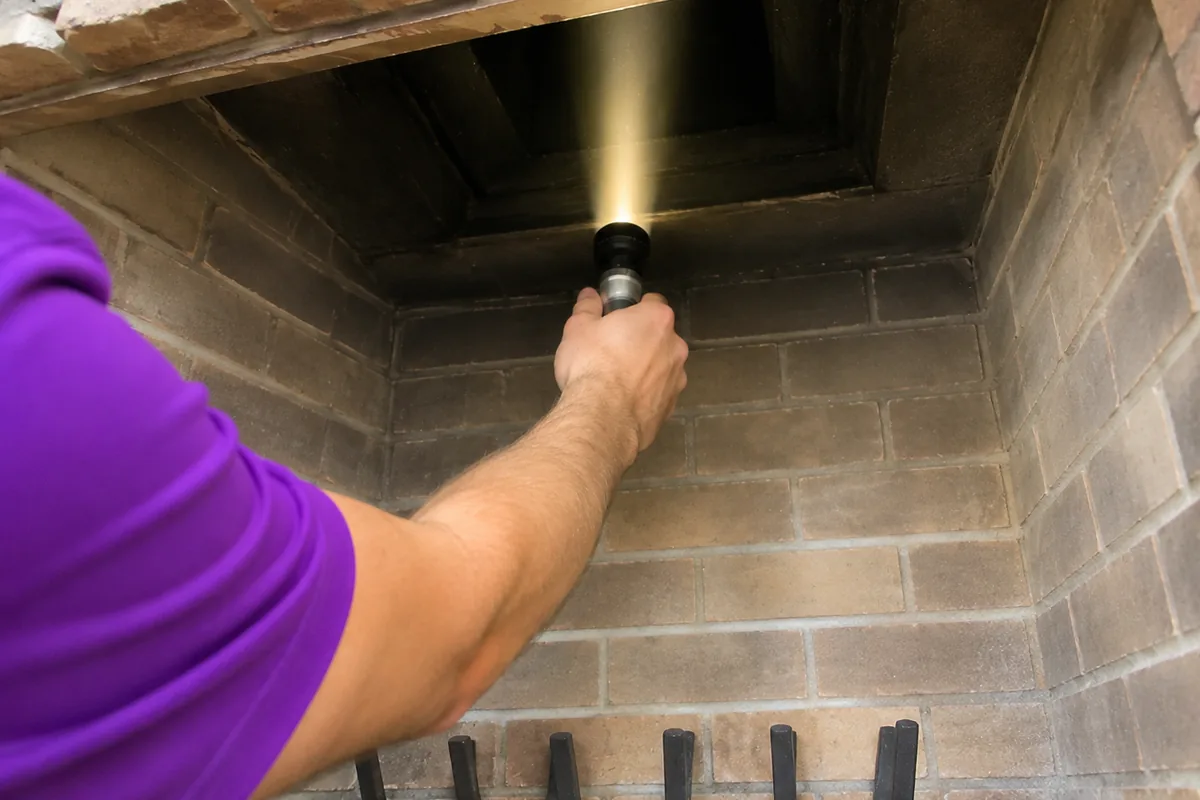
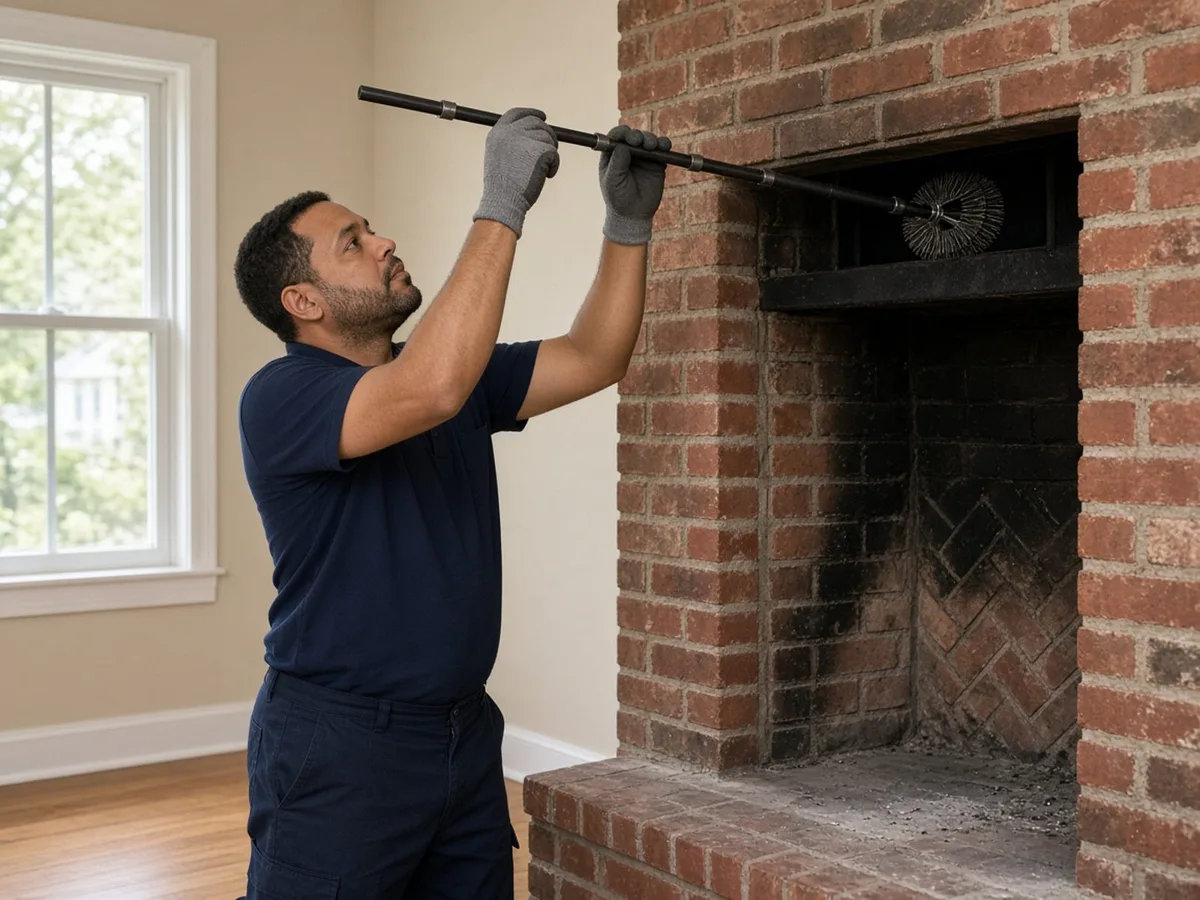
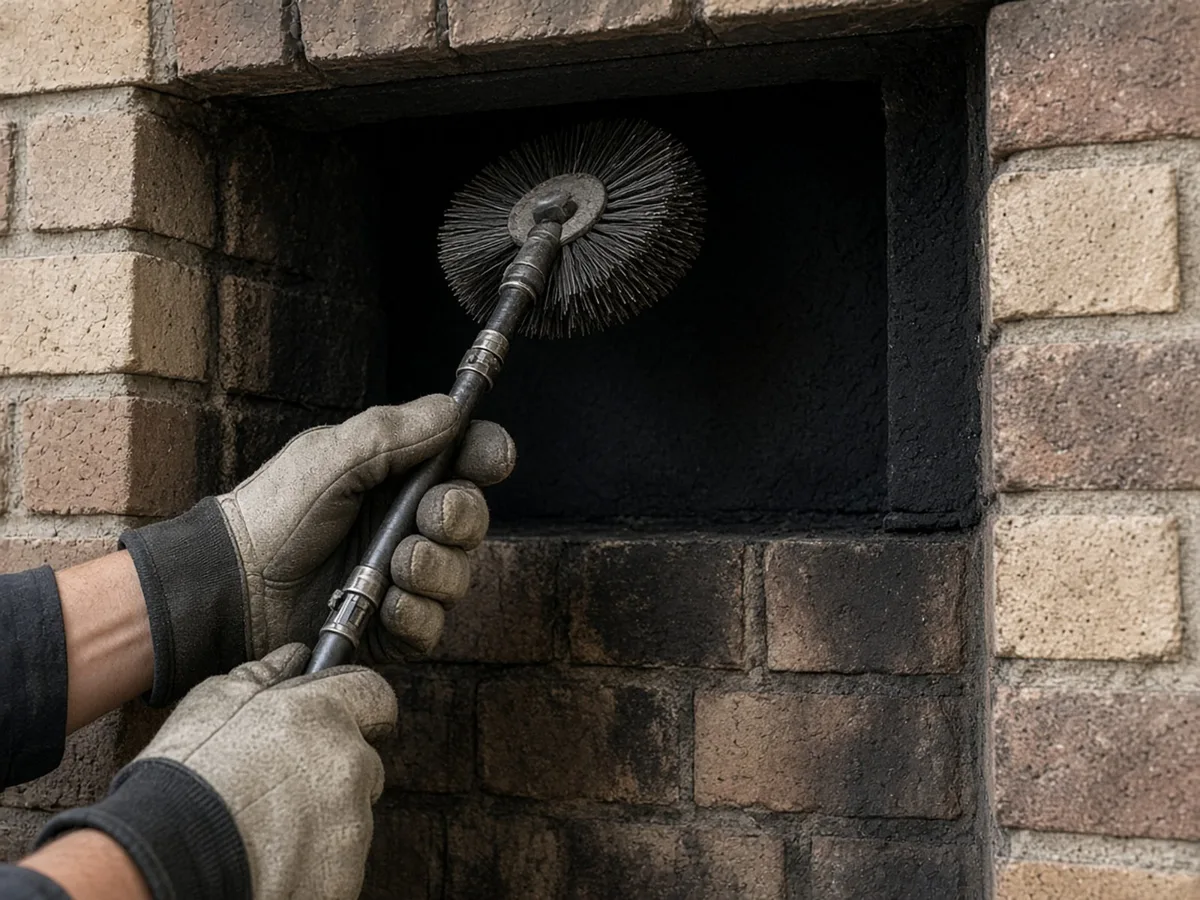
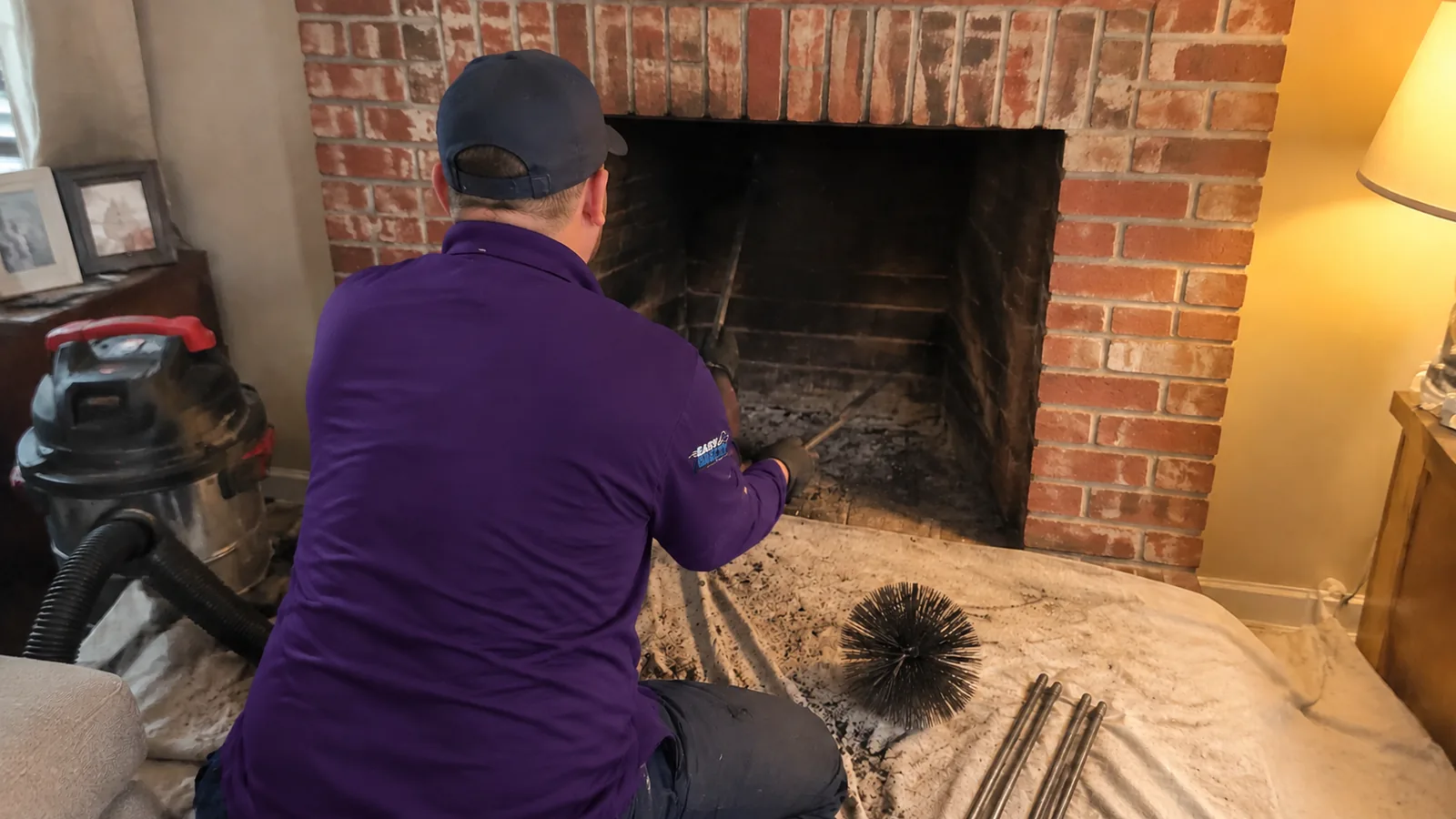
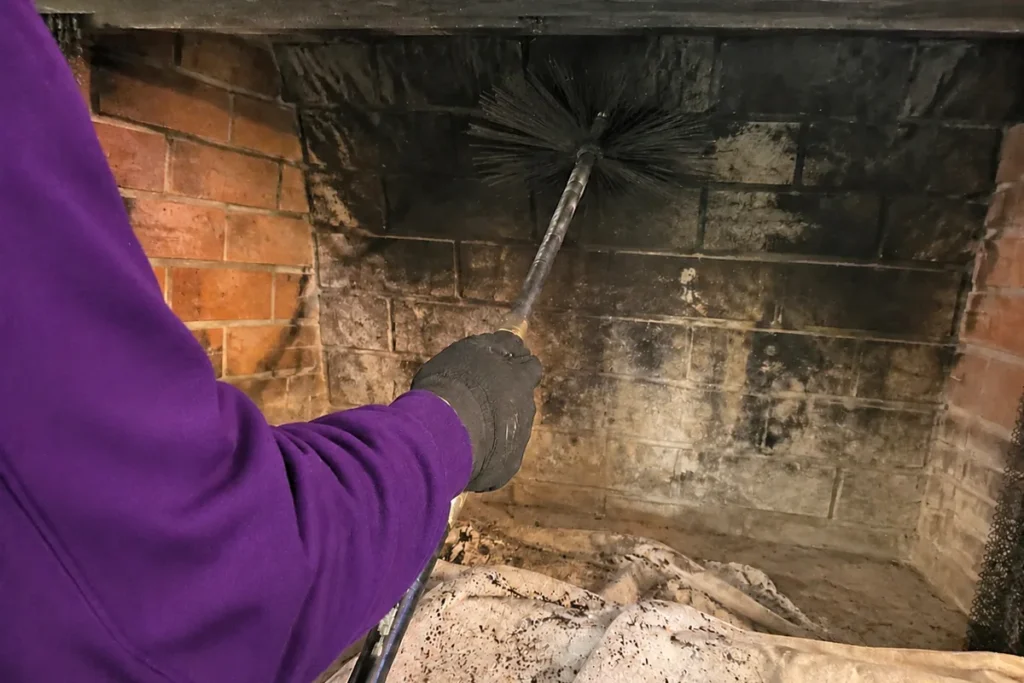
Get a look if it’s been a while or you’re not sure, and sweep when the buildup is there. What the residue looks like, and when a sweep is due, is in our article on creosote buildup. A store-bought log or spray is not a substitute for a mechanical sweep of the flue and smoke chamber.
Other habits that lower the risk
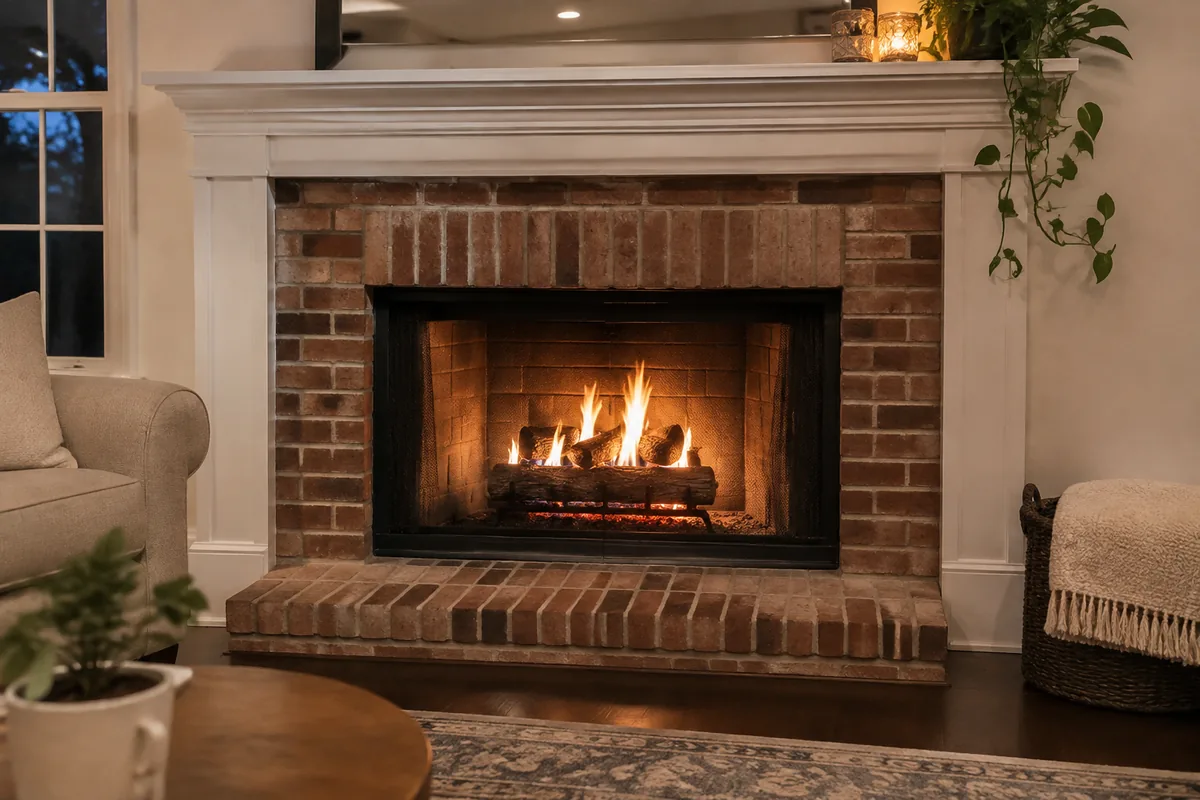
Keep a screen in front of an open fire, and keep furniture, rugs, and kindling well back from the hearth. Don’t leave a fire unattended. Working smoke and carbon monoxide alarms belong in the house year-round, not just during a cold snap.
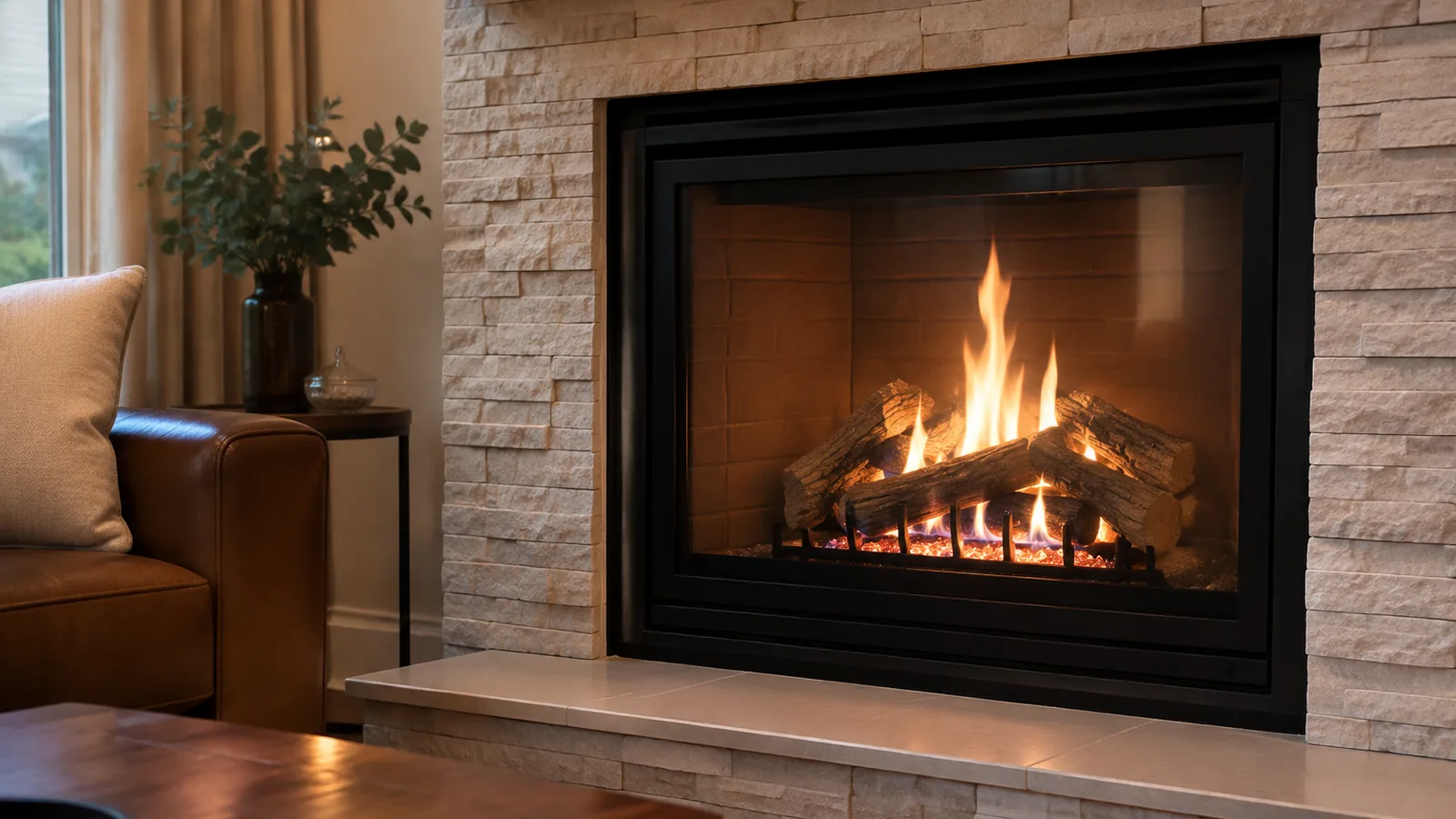
If you have a gas fireplace, it is not a source of creosote the way a wood fire is, but the unit and its venting still need care. Our gas fireplace cleaning visit covers the glass, the logs and embers, and the burner area.
If you think a fire is in the chimney
If you hear loud cracking or popping in the chimney, see dense smoke, feel a sudden, intense heat, or hear that low rumble, treat it as a fire emergency. Get everyone out and call 911. The heat of a chimney fire can damage the chimney itself and, in a masonry chimney, can open a path for flames to reach the wood structure of the house.
Many chimney fires go undetected. A slow fire inside the flue can still reach very high temperatures and leave damage you won’t see from the living room. Signs that something already happened can include puffy or honeycombed creosote, creosote flakes on the roof or the ground, cracks in the exterior masonry, or smoke stains at the mortar joints.
Do not use the fireplace again until a technician has swept the chimney and looked it over, because damage inside the flue is often hidden from above and below. On our visit, the technician points out what he saw and shares the photos. If he finds a cracked flue or other damage, he shows you. He does not put the fireplace back in service with a guess.
The visit itself is our chimney sweep and chimney inspection.
We help homeowners in Maryland, DC and Northern Virginia get that look and the sweep when it’s needed. Call 240-641-0770 for a free estimate.
Frequently asked questions
What causes a chimney fire?
Creosote in the flue is the usual fuel. When enough of it is there, and the temperature inside the chimney gets high enough, that residue can ignite. Wet wood, a short air supply, and a cold chimney all speed the buildup. A dirty flue is the usual condition behind it.
What should I do if I think a chimney fire is happening?
Treat it as a fire emergency. Get everyone out and call 911. After the fire department has finished, do not light the fireplace again until a technician has swept the chimney and looked it over. Once the fire is out, have the flue checked before the next fire.
Can a chimney fire happen without anyone noticing?
Yes. Many chimney fires go undetected. A slow fire inside the flue can still get hot enough to damage the chimney, and the signs may only show up later, as puffy or honeycombed creosote, flakes on the roof or ground, or cracks in the exterior masonry.
What kind of wood should I burn to lower the risk?
Only well-seasoned wood. Split it and dry it for months, ideally six months to a year, and keep the pile off the ground and covered on top. Don’t burn Christmas trees, treated wood, wrapping paper, pizza boxes, or foam, and never start a fire with flammable liquids.
Do I need a look if I barely use the fireplace?
Yes, if it’s been a while or you’re not sure what’s up there. Nests and debris can show up in an idle flue, and last year’s buildup is still there until someone takes it out. You sweep when the residue is there, not on a fixed calendar.