By Joe and Mike, Easy Breezy Air Duct & Chimney Services
Run your hand along the firebox brick after a winter of Saturday fires and you’ll often come away with a black smear. That smear is the easy part to see. The part that matters is farther up, where smoke cools on the way out and leaves a residue on the inside of the flue.
That residue is creosote.
What creosote is
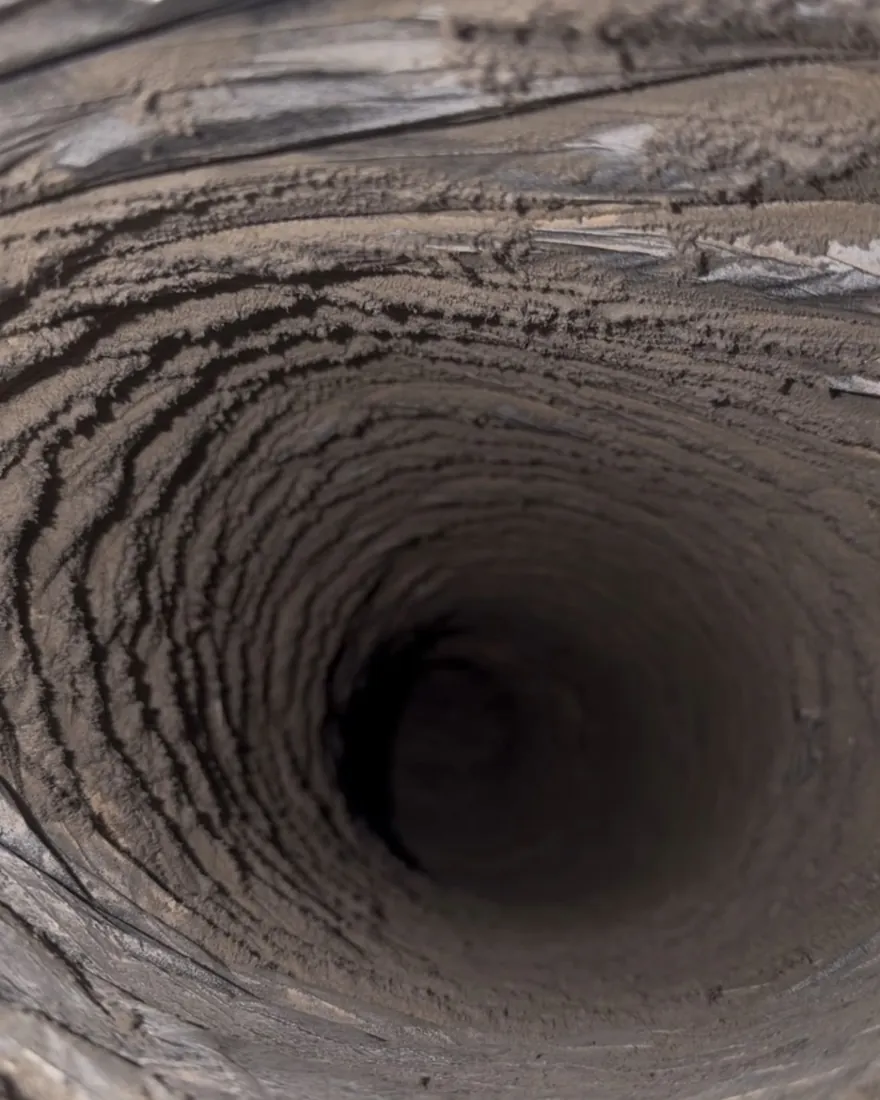
When wood burns, the fire sends up smoke, water vapor, gases, unburned wood particles, and tar. As that mix leaves the fire and moves into a cooler chimney, it condenses. What sticks to the flue walls is creosote. It is black or brown. It can look crusty and flaky, tar-like and sticky, or shiny and hardened, and more than one of those forms often shows up in the same chimney.
All of those forms burn. If enough of it sits in the flue, and the temperature inside gets high enough, it can start a chimney fire. What matters is how much is in the flue, and what that layer looks like, not only whether the firebox looks dirty. How to keep this residue from starting a fire is in how to prevent chimney fires at home.
What it looks like as it builds
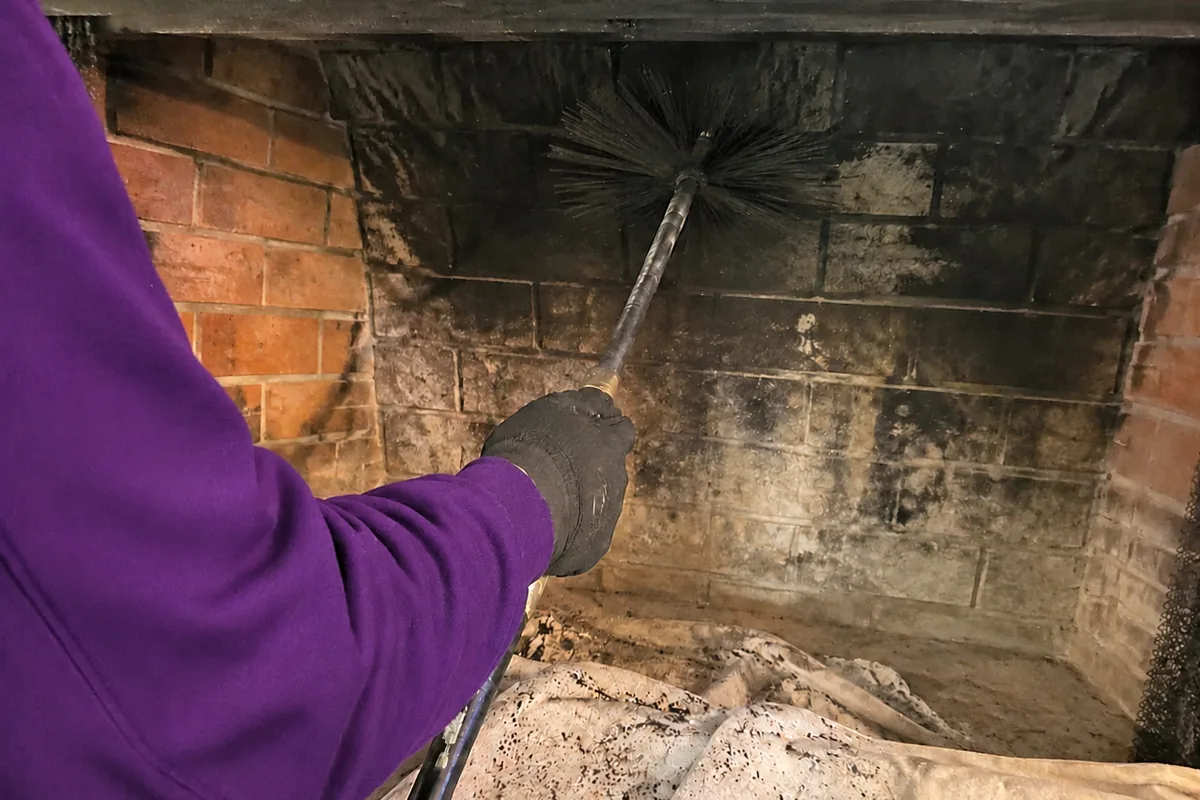
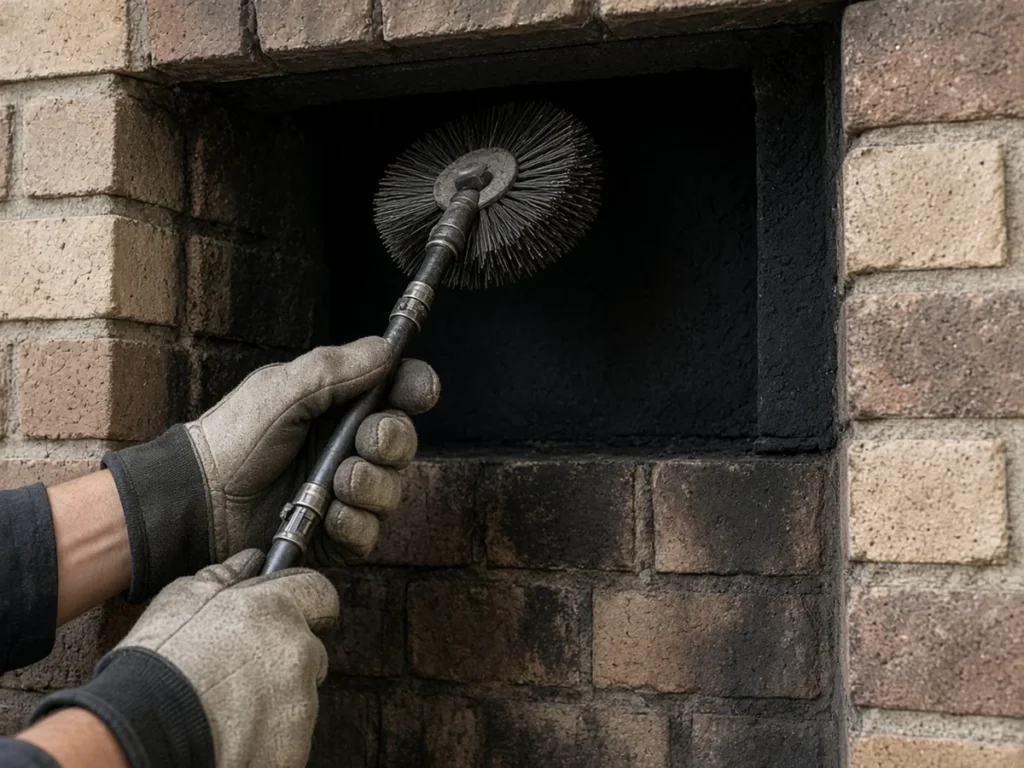
The first form most homeowners notice is a dry, sooty layer. It looks like black or dark brown dust or flakes on the firebox brick and, if you could see it, on the flue walls. A brush handles this kind of residue well when it is time to sweep.
Leave it, or keep burning in a way that keeps the smoke cool, and the residue can turn gummy. That glaze can be tar-like, drippy, and sticky. It can look like varnish, or like a wet tar smear, on the inside of the flue. A standard brushing often isn’t enough on its own for this form.
The hardest form is shiny and hardened. It can look almost glazed, like a dark enamel on the flue wall. This kind of buildup often needs more than a brush alone, and that’s a different visit from a light, sooty sweep.
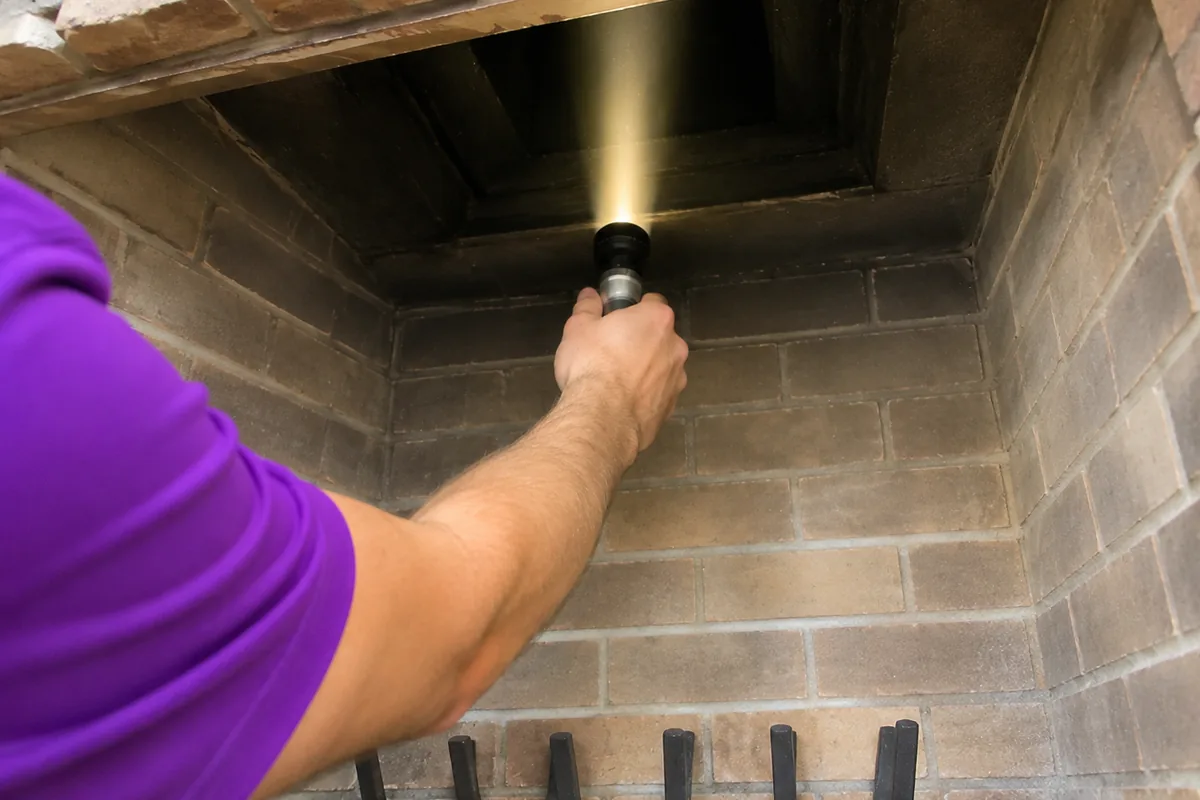
You usually cannot judge this from the living room. The firebox can look only lightly sooty while the smoke chamber and flue hold a thicker or stickier layer. A technician looks up the system, not just at the brick around the fire.
What makes it build faster
Three conditions speed this up: not enough air to the fire, unseasoned wood, and a cooler-than-normal chimney.
Fresh-cut logs hold a lot of water. The fire spends its energy driving that water off, so the smoke stays cooler as it goes up the flue and leaves more creosote behind. Well-seasoned wood, split and dried for months, burns hotter and cleaner. Only well-seasoned wood belongs in the fireplace, and nothing else. Wrapping paper, pizza boxes, and foam packaging don’t belong in the fire, and neither do Christmas trees or treated wood.
Closing the glass doors on a fire that’s still smoking, or starving a wood stove of air too early, keeps smoke in the flue longer, and the longer it sits, the more residue it can leave. A flue on an outside wall, or one that only gets used on weekend nights, stays colder than a chimney that’s been warm all afternoon. Cooler walls mean more condensation.
Wet wood and a DMV winter
This area gives those conditions plenty of help. Midwinter here is a long stretch for weekend fires, and for a wood pile in the yard to stay wet.
Wood that was cut late, stacked on the ground, or left uncovered through our winter rain and freeze-thaw cycle often isn’t dry enough. You can hear it: the log hisses and smolders instead of catching with a clean flame. Burn most weekends from late fall through March, and that cooler, wetter smoke has months to leave a layer in the flue.
When to sweep
Have the chimney looked at if it’s been a while or you’re not sure, and before you rely on it for the season. A look is not the same as a sweep. Sweep when sooty buildup is there, and sooner if any glaze is already in the system. On a factory-built fireplace, any appreciable buildup is a reason to sweep. That residue is enough to start a chimney fire that can damage the chimney or reach the house.
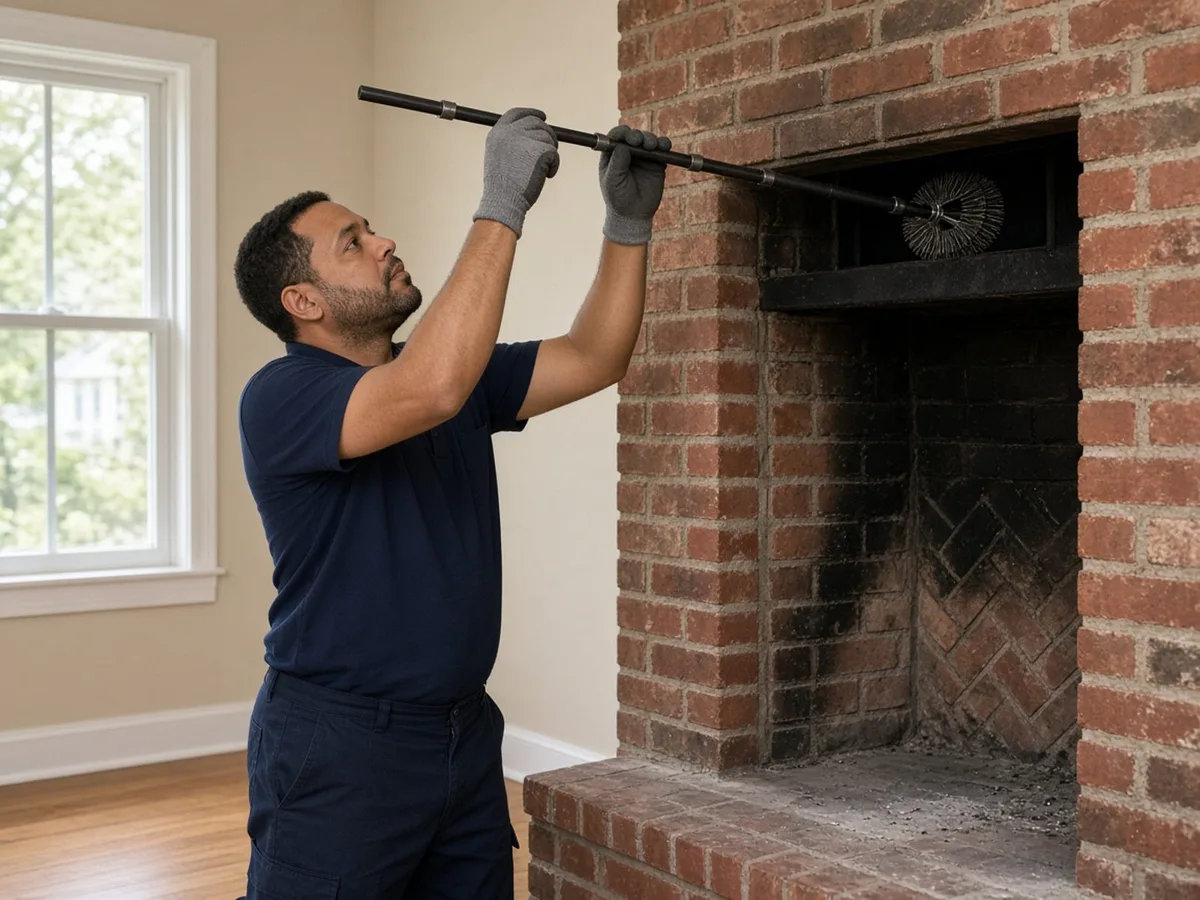
A chemical log or spray is not a stand-in for that work. Chemical cleaners should not be used as the only way to clean a chimney, and they don’t take the place of a mechanical brush through the flue and the smoke chamber.
If you only light a fire now and then, you may not build up enough to need a sweep, but you still want a look if it’s been a while. Nests and debris can show up in a flue you barely use. If you burn often, or if last winter’s wood wasn’t fully dry, don’t wait for the firebox to look ugly.
On humid summer days, some chimneys give off a smoky or sharp smell from creosote, worse with humidity and air conditioning. A sweep often helps but does not always wipe it out completely.
What a sweep does with the buildup
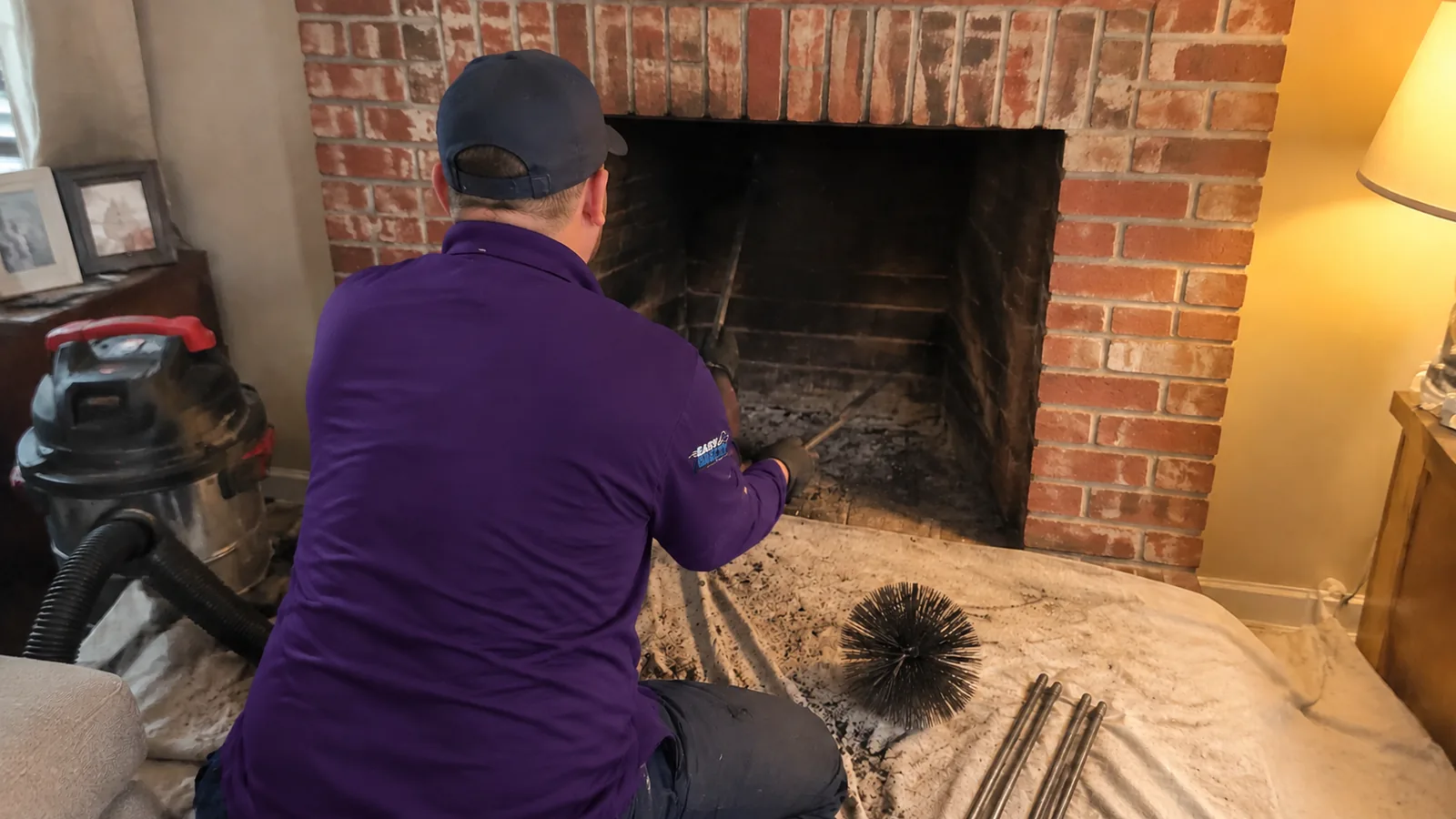
A complete sweeping takes the creosote and soot out of the flue and the smoke chamber, not just the firebox. On our visit, the technician does that work, looks the chimney over, then goes over the photos with you and explains what is in the flue. The sweep and the look together usually take about an hour on site.
Easy Breezy serves homes in Maryland, DC and Northern Virginia. The full visit is on our chimney sweep page, and what the look covers is on our chimney inspection page. If you want that look, or you already know the fireplace had a heavy winter, we can help. Call 240-641-0770 for a free estimate.
Frequently asked questions
What does creosote look like?
It is black or brown. Early on it can look dry, crusty, or flaky, like soot on the brick. It can also turn tar-like and sticky, or harden into a shiny glaze. A single chimney often holds more than one of those forms at the same time.
How much creosote is too much?
Sooty residue is already a reason to schedule a sweep, and glaze means you should not wait. On a factory-built fireplace, any appreciable buildup is the trigger. You usually cannot measure that from the living room, so the flue itself has to be looked at.
Does burning wood in a DMV winter leave more creosote?
It can, if the wood is wet or the chimney stays cold. Unseasoned or rain-soaked logs keep the smoke cooler, and cooler smoke leaves more residue. Many homeowners around here burn from late fall through March.
Can a store-bought log or spray remove creosote?
No. A log or spray can’t stand in for a mechanical brush through the flue and the smoke chamber. On a glazed flue they may be used first, then followed by brushing.
Can a chimney I barely use still have creosote?
Yes. Light use does not mean last year’s residue is gone, and a flue that sat unused can also pick up nests or debris. If it’s been a while or you’re not sure, a look is how you find out what’s actually in it.