HVAC UV Light Installation in Maryland, DC & Northern Virginia

Ozone-free UV lights for furnaces and HVAC systems, matched to your home, with an honest explanation of what they do.

  • Ozone-free UV lights
  • Four types, chosen for your system
  • Straight answers on what lamps do
5.038 Google reviews See all reviews on Google
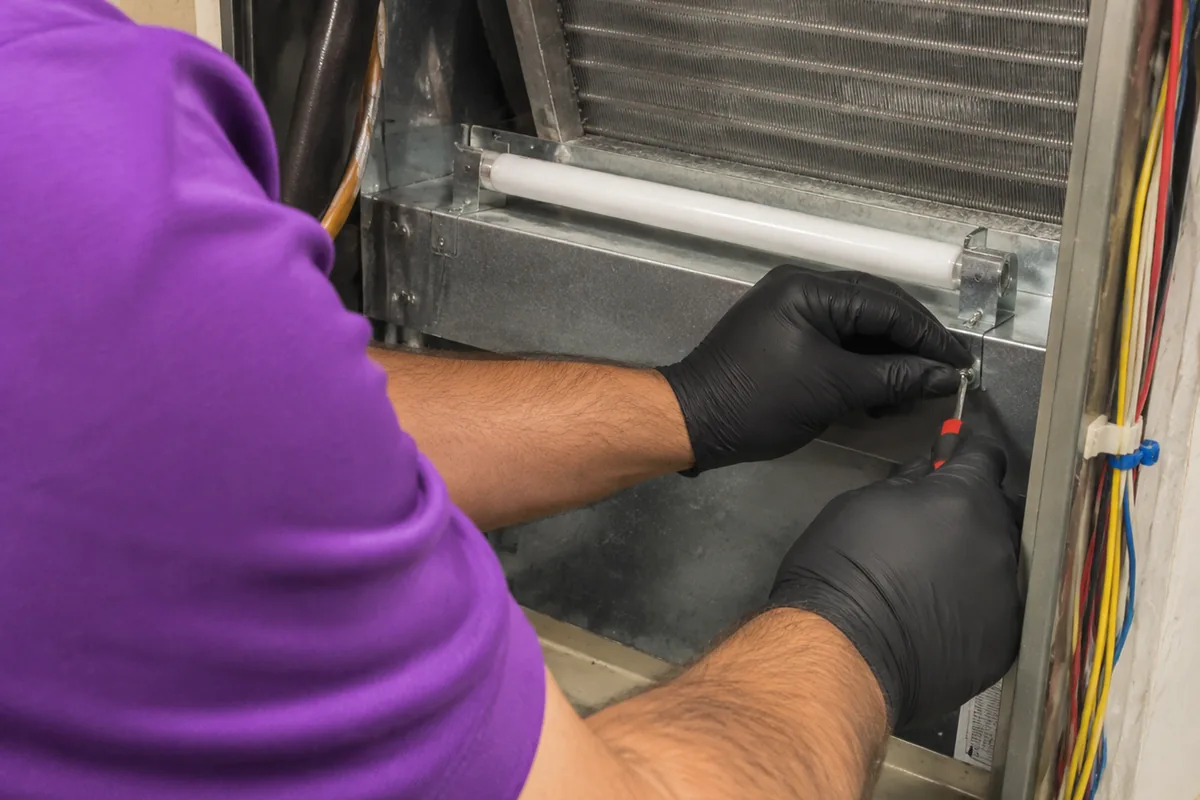
Technician installing a UV light on a home HVAC system.

If you’ve started shopping for a UV light for your HVAC system, you’ve probably noticed that every ad promises something bigger than the last. Cleaner air, fewer allergies. After a while it’s hard to tell what’s real. The truth is simpler than the ads. HVAC UV light installation does one job well, and in the right system it’s a useful one. Knowing exactly what that job is will help you decide whether a lamp belongs in your home, and if it does, which kind.

Easy Breezy is family-owned, and we install HVAC UV lights for homes throughout Maryland, Washington, DC and Northern Virginia.

The one job a UV lamp does well

Inside your air handler, the cooling coil and the drain pan beneath it stay damp for months at a time. Wet, dark surfaces like those are where microorganisms grow. The EPA describes UV lamps in HVAC systems as a tool against that kind of growth on surfaces such as coils, drain pans and ductwork, and most home units use UV-C light to do it. A lamp keeps steady light on those wet surfaces between cleanings, and that’s what you’re paying for.

The limits deserve the same honesty. According to the EPA, UV lights don’t remove dust or particles, so they belong alongside a good filter, never in place of one. The EPA found no studies showing UV removes odors, gases or fumes, and none showing it reduces dust mite or mold allergens. Dead mold spores can still cause allergic reactions. A lamp doesn’t fix a mold problem, either. That takes fixing the moisture and cleaning the mold out. And typical home units have limited effectiveness against germs in moving air, because killing airborne germs and spores takes far more UV exposure than a home system delivers. That’s why you won’t hear us promise cleaner air, fewer allergies or protection from viruses.

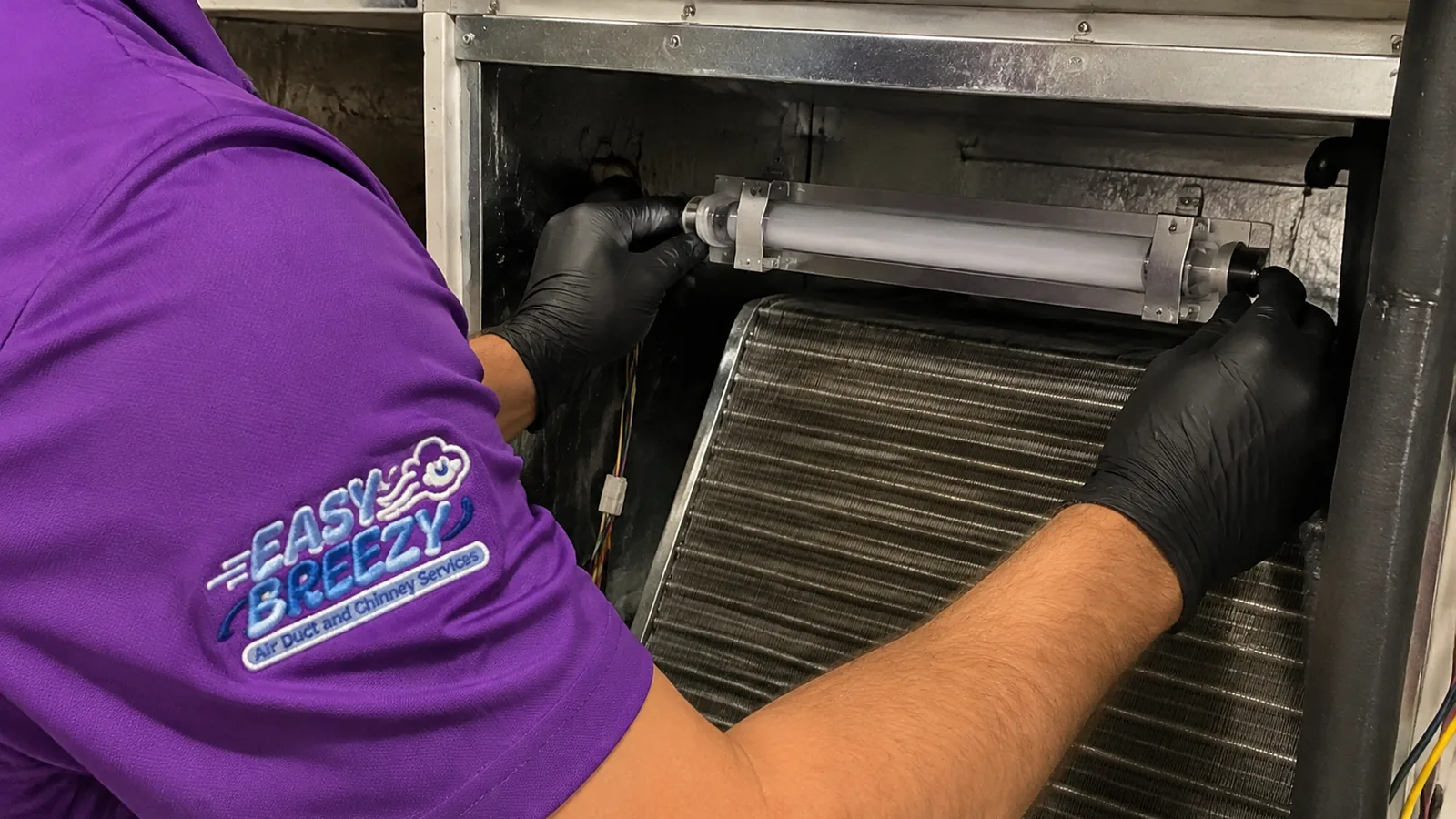
Close view of a UV lamp mounted inside an air handler near the cooling coil.

Is a lamp right for your system?

A UV light makes the most sense when the system is already clean, there’s no leak or mold problem, and you want something working on the coil and drain pan between cleanings. If the ducts are dirty, mold is visible, the drain pan is clogged or there’s a moisture problem, those come first, and a lamp can wait. If you’re buying one mainly to stop allergies, odors or illness, the EPA’s research doesn’t back that up.

A lamp is also no replacement for cleaning. People search for UV lights for air ducts, but a light doesn’t remove dust or debris from anything. That’s why dirty ducts need an air duct cleaning, and a dusty blower and coil need electric furnace cleaning, before a lamp goes in.

The kinds of UV lights we install

We install four kinds of ozone-free UV lights for furnaces and HVAC systems: coil-sanitizing lamps, UV plus carbon in-duct units, UV plus carbon cabinet units, and UV lights for mini-splits. The right one depends on how your system is built and what you want the lamp to do. The technician assesses your system first, recommends the type that fits your home, and then installs it. Among them are the green UV lights we offer.

A coil-sanitizing lamp is aimed at the cooling coil, the drain pan and the damp surfaces around them. It usually stays on even when the blower is off, because it’s working on a surface rather than on moving air. We won’t promise a carbon stage clears every smell, since the EPA found no studies showing UV light alone removes gases.

Every lamp we install is ozone-free. That matters, because the EPA calls ozone a lung irritant and advises avoiding UV lights “without adequate lamp coatings.” UV-C light can also harm eyes and skin, so the lamp stays enclosed inside the equipment, and the power should be shut off before anyone services it.

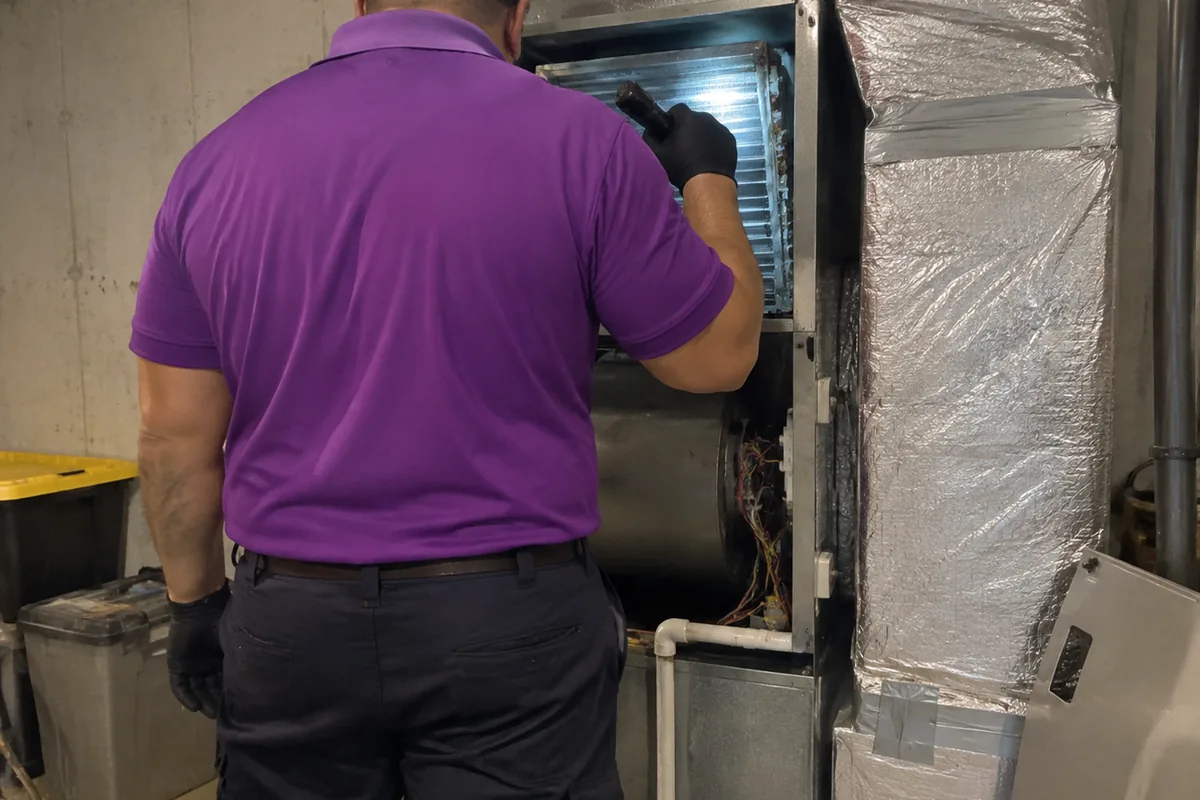
Close view of a technician checking an air handler before a UV light installation.

How the job goes

The technician looks at your air handler first, and talks through which type of lamp fits the system. If you go ahead, he installs the lamp in the right spot, keeps it enclosed, and powers it up to confirm it lights.

You shouldn’t have to guess what you bought. We’ll show you where it sits and what it’s aimed at before we leave.

Keeping a lamp working

A UV lamp keeps glowing long after it stops doing its job, so a lit bulb doesn’t prove it’s still working. Replacement timing depends on the lamp model, so replace it on the schedule the maker sets. The EPA notes that UV systems need regular maintenance, including cleaning dust off the lamps and replacing old ones. The lamps contain a small amount of mercury, so worn-out ones should go to recycling rather than the trash.

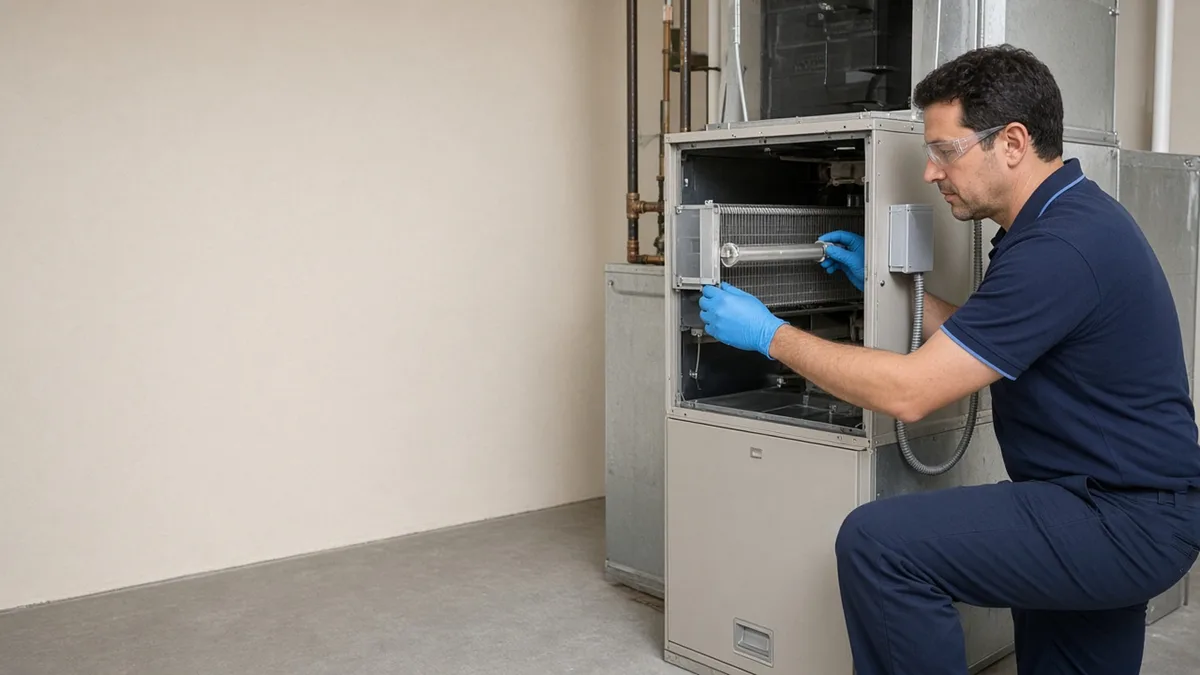
Technician in safety glasses working inside an open air handler cabinet.

Cooling season around here

Humid summers in this area keep cooling coils and drain pans wet for weeks at a time. That’s the stretch when a coil-sanitizing lamp is doing the work it’s meant to do, sitting on those damp surfaces between cleanings. If last summer left the coil filthy, start with a cleaning. A lamp going onto a dirty coil isn’t a shortcut.

Homes with tightly closed windows and long cooling runs are the usual setting for this conversation. We’ll look at your system and tell you whether a lamp is the right next step, or whether something else should come first.

UV light questions

Do UV lights in HVAC systems work?

For a specific job, yes. They work against growth on damp surfaces like the cooling coil and drain pan. The EPA also says typical home units have limited effectiveness against germs in the air, don't remove dust, odors or gases, and haven't been shown to reduce allergens.

Is a UV light in my HVAC worth it?

It can be a reasonable addition if your system is clean and you want something working on the coil and drain pan. If you're hoping for fewer allergies or cleaner air overall, the EPA's research doesn't support buying one for that, and we'd rather tell you than sell you one.

Where to install a UV light in HVAC?

It depends on the system and the type of lamp. The most common spots are inside the air handler, aimed at the coil and drain pan, or in the ductwork. The technician assesses your system, recommends the type that fits, and shows you where it would go.

Can I install a UV light myself?

We don't recommend it. It's wired equipment inside your air handler, and UV-C light can hurt your eyes and skin. A technician can install it safely and in the right spot.

Is a UV light the same as air duct cleaning?

No. A lamp doesn't remove any dust or debris. Dirty ducts need a duct cleaning, and the lamp, if you want one, goes in after.

How much to install a UV light in HVAC?

It depends on the type of lamp your system calls for and where it needs to go. We'll give you a straight price before we start.

Talk to Easy Breezy

The lamps have a 2-5 year warranty depending on the product.

If you’re not happy with the job, we come back and make it right, free.

Call 240-641-0770 for a free estimate.

Tell us what needs cleaning