Chimney Repair in Maryland, DC & Northern Virginia

We repair crowns, liners, brick, caps, flashing and waterproofing on masonry chimneys, with photos of the damage before any quote.

  • Photos of the damage before any quote
  • Some repairs fit the sweep visit
  • Trained, experienced technicians
5.038 Google reviews See all reviews on Google
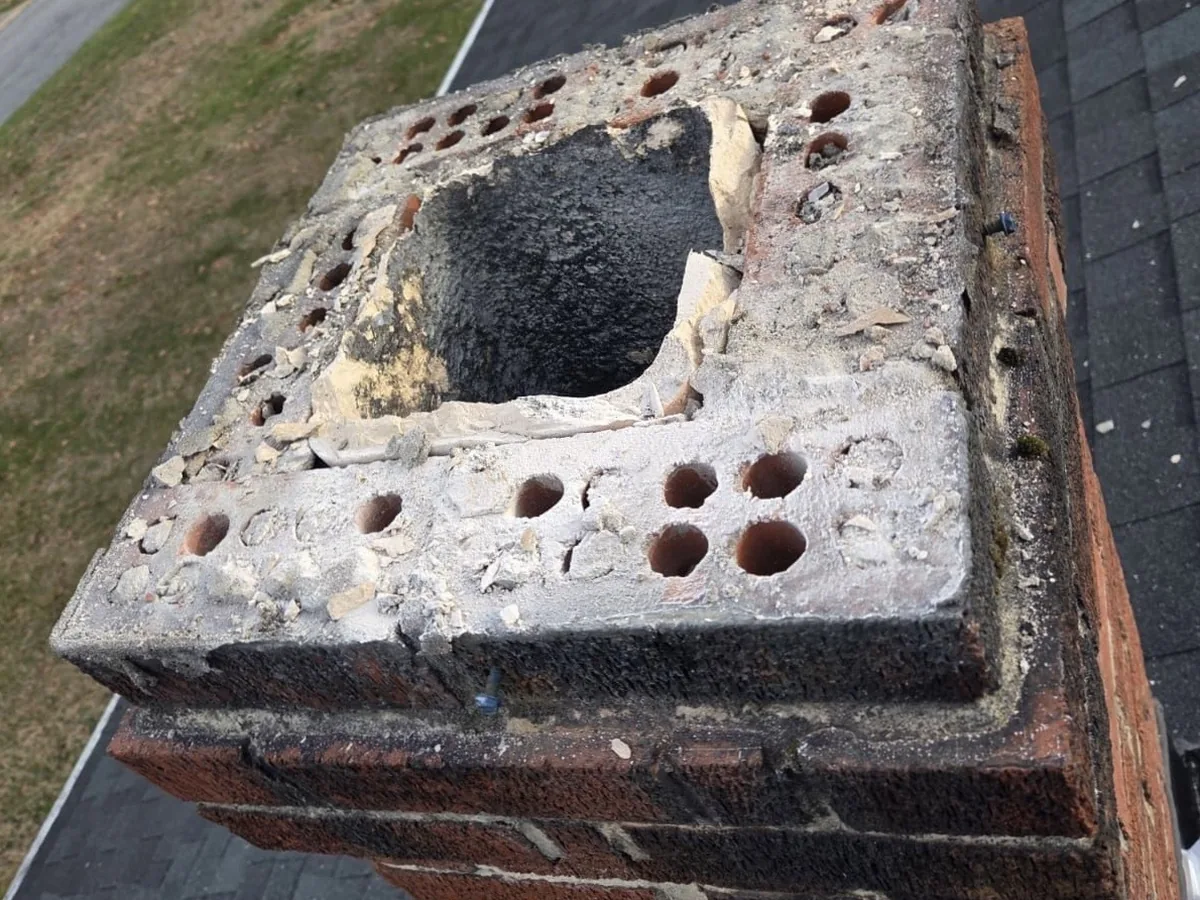
Cracked concrete crown on top of a brick chimney, photographed before repair.

Chimney repair usually starts with something small, like a hairline crack near the flue or one brick up high that has lost its face.

From the driveway, you won’t see it for a few winters. Then a brown stain shows up beside the fireplace, or red brick chips turn up in the gutter after a storm, and by then the water has been getting in for a while. It’s better to catch it at a cracked crown or a few bad bricks.

That’s the work we do on masonry chimneys, for homes across Maryland, Washington, DC and Northern Virginia.

From photos to a repaired chimney

  1. Photos come first

    Every repair starts with a look and a set of photos.

  2. A camera scan for liner jobs

    For a liner job, a camera scan of the flue comes first.

  3. Going over the photos

    He shows you what's damaged and what he'd fix.

  4. Repair day

    Some repairs fit into the same visit as your sweep. Others need a second trip.

What winter does to a brick chimney

Brick soaks up water, and so does mortar. Rain goes in and the sun dries it out, and for most of the year that’s no problem.

January is different. It drops below freezing at night, reaches forty-five by the afternoon, and freezes again by Thursday. Water sitting in a crack freezes, pushes the crack wider, thaws, and lets more water in. From December into March, a crack you could barely catch a fingernail on can turn into a missing chunk of crown.

Older chimneys get it worse. Some never had a real crown, only a skim of mortar on top. Others were patched decades back with mortar harder than the brick. Harder mortar sounds better than it is. It won’t give, so the brick takes the stress, and the face pops off.

Chimney crown repair

The crown is the slab on top, around the flue tile. Its one job is to shed water.

A good crown slopes away from the flue and hangs out past the brick with a drip edge, and it isn’t poured tight against the tile. A bad crown is a flat mortar skim, flush with the top row of brick, with rain sheeting straight down the face.

These are the signs a crown is going:

  • cracks running out from the flue
  • a gap where it meets the tile
  • thin, crumbly edges, or chunks gone
  • a white, chalky stain on the top bricks, which usually means water’s coming through
  • bits of mortar on the shingles

There are two fixes. A solid crown with fine cracks gets sealed. One that’s crumbling, or was never more than a mortar skim, gets replaced with a new poured crown, because no sealer adds a slope or an overhang that was never there.

Roofing tar or silicone smeared over the cracks isn’t a seal. It lets go, and the water gets under it.

Chimney liners

The liner is the passage inside the chimney. Smoke and hot gases go up it, and it keeps that heat off the brick and the wood framing in your walls. Plenty of older masonry chimneys have clay tile, stacked in sections.

Clay cracks from heat, settling, a chimney fire, or years of water coming past a bad crown.

Have you found bits of broken tile in the firebox, or is a fireplace that always drew fine now puffing smoke back at you? Smoke has other causes, so take it as a reason to get the flue looked at, not a verdict. Some older chimneys were also built with no liner at all.

This one is about safety. The EPA warns that blocked, leaking or damaged chimneys or flues can release harmful combustion gases and particles, even dangerous levels of carbon monoxide. After a chimney fire, or if you think you had one, keep the fireplace cold until the liner has been checked.

A camera goes up the flue before every liner job. The new liner has to be the right type and size for the fireplace it serves, and the scan shows what’s in there now.

Chimney brick repair and tuckpointing

A spalled brick has lost its hard outer face. The soft inside drinks rain, and each freeze takes a little more.

Look for flaked faces, rounded and crumbly corners, and chips in the gutter or the mulch bed. As a rule it starts high, where the weather and a bad crown hit hardest.

No patch puts a face back on a brick. The damaged bricks come out, and new brick goes in with fresh mortar. Matching hundred-year-old brick exactly can be hard, so he’ll talk through the options with you.

Then there are the joints. If they’re sandy, cracked or sunk back from the brick, water is getting into the wall, and we tuckpoint them with fresh mortar when they need it.

New bricks under a failing crown only buy time, though, because the water is still coming from above. That’s why the whole top of the chimney gets looked at, not just the bricks you spotted from the yard.

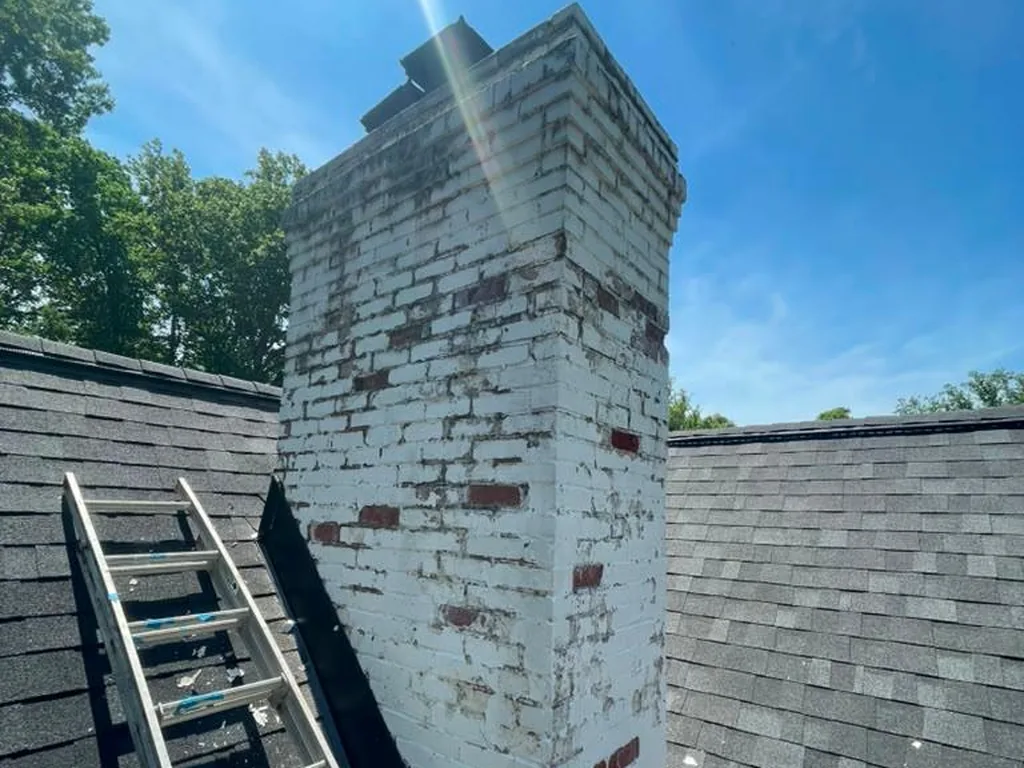
White brick chimney with replaced bricks, partway through an Easy Breezy chimney repair.

Chimney caps

The cap sits over the flue, and it’s a separate piece from the crown under it.

A good cap helps keep rain from dropping straight down the flue and keeps birds and squirrels out. Its spark screen helps keep embers off the roof.

When a cap is missing, rusted through, leaning or has a torn screen, you’ll often notice from inside first:

  • water in the firebox after a rain
  • scratching or chirping in April
  • leaves and twigs dropping into the fireplace

Water in the firebox can also come from the crown or the flashing, and the photos help sort out which. If the cap is the problem, we install and replace chimney caps. Like every repair, it starts with photos.

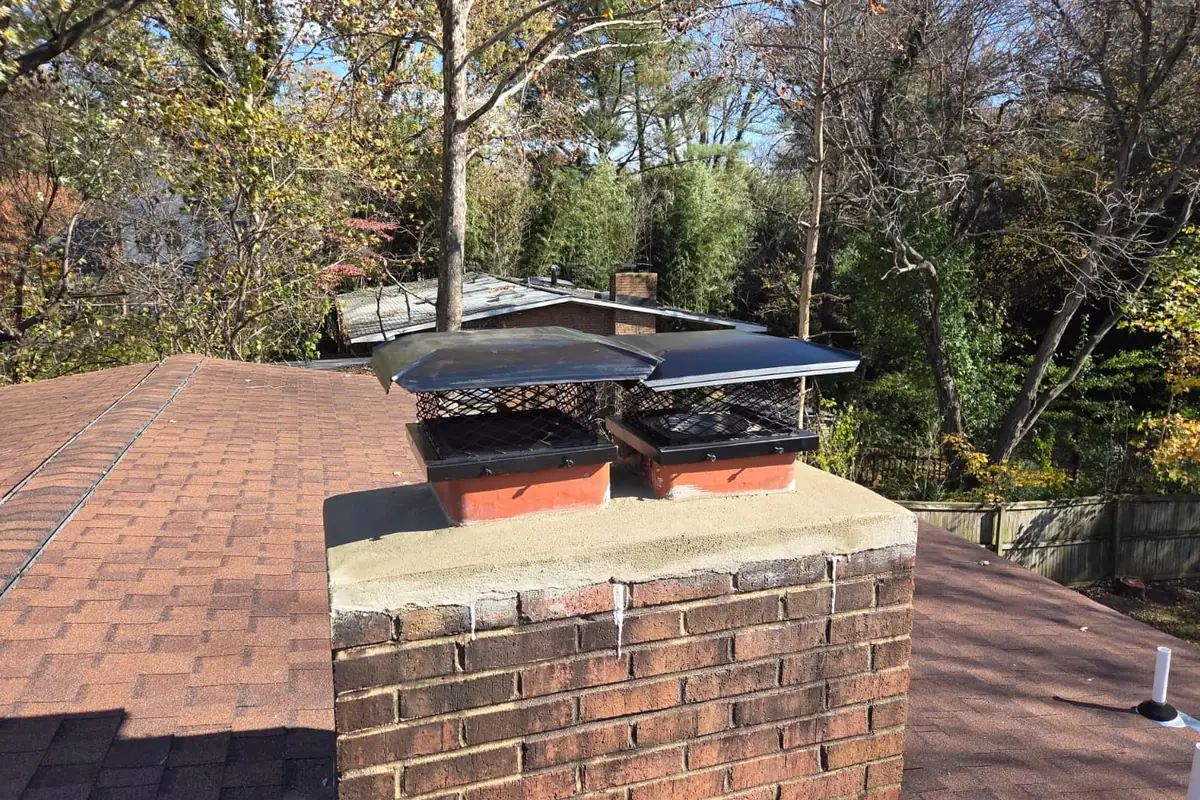
Brick chimney on a shingle roof with two chimney caps.

Chimney flashing repair

Flashing is the metal seal where the chimney meets the roof, and it is laid in two layers. The bottom one runs along the base and onto the roof. The top one tucks into a mortar joint and laps down over it, so water sliding down the brick lands on top of the roofing, not under it.

Bad flashing often shows up inside first, as a stain on the ceiling or wall right by the chimney after a sideways rain.

From the yard, look for rusty or lifted metal, metal pulled out of its joint, and old caulk that’s cracked and peeling.

A chimney and a house move differently as they heat, cool and settle. A bead of caulk or a smear of tar over a failed joint won’t keep up with that. Real flashing repair fixes the metal and how it’s tied into the brick. A stain near the chimney can also come from the crown, the cap, open brick or the roof around it, so he checks the rest before blaming the flashing. When it is the flashing, we fix it.

Chimney waterproofing

Brick holds water, and freeze and thaw tears it up.

Waterproofing here means a breathable water repellent, put on after the repairs are done and the masonry is dry. The breathable part is the point, since rain stays out, vapor gets out, and the brick keeps drying.

It can’t seal a crack, and it won’t cover for a bad crown, failed flashing or open joints. Those get fixed first, and the repellent goes on last. If the brick is sound once the crown and flashing are fixed, you may not need repellent at all, and he’ll tell you so.

How a chimney repair visit works

The photos cover the crown, cap, brick, mortar joints and any sign of a flashing leak. How the very top gets photographed is explained on the chimney inspection page.

When he goes over them with you, he also explains what’s likely causing the damage.

You get a free estimate before any work starts. When a repair can be done on the same visit as your chimney sweep, he’ll tell you.

When to schedule chimney repairs

Mild weather, before the hard freezes set in, works best. Concrete and mortar like mild temperatures to cure, and every freeze and thaw works on an open crack. Once he’s seen the chimney, he’ll tell you what to expect.

Don’t wait for the season if there’s an active leak, loose or falling brick, or pieces of tile in the firebox. Call when you see them. If tile is coming down, the fireplace stays cold until the flue has been checked.

Chimneys here run from old brick rowhouses to 1970s brick colonials. Masonry from Montgomery County down through Northern Virginia takes the same freeze and thaw, and we fix chimneys across every one of our service areas.

Chimney repair FAQ

Can a cracked chimney crown be sealed instead of replaced?

Yes, if it's solid and the cracks are fine. If it's crumbling, loose, missing chunks or just a mortar wash, it needs a new poured crown, since no sealer can add slope or an overhang.

How can I tell if my chimney liner is damaged?

Broken bits of clay tile in the firebox are one sign you can spot yourself. Smoke spilling into the room from a fireplace that used to draw well can be another, though smoke has other causes. After any chimney fire, leave the fireplace cold until it's been checked, because liner damage often can't be seen from the room.

Why are the bricks on my chimney flaking?

Usually it's water getting into the brick and freezing. Once that hard face cracks off, the inside soaks up even more, so it gets worse each winter. Badly flaked bricks get replaced. A coating can't bring a face back.

Will a chimney cap stop downdrafts?

Not reliably. A smoky room usually traces back to something else: low air pressure in a tight house, a flue that's the wrong size, a chimney that's too short. What a cap does well is help keep rain and animals out and catch sparks.

Is chimney waterproofing the same as painting the brick?

No. Paint and film-forming sealers can trap moisture in the brick. A breathable repellent keeps rain out and still lets the brick dry, and in freeze-and-thaw weather that difference is what keeps faces from popping off.

How much does chimney repair cost?

It depends on what's damaged and how much of it, so the price gets set after the technician's seen your chimney. You'll see photos of the problem and get a free estimate before anything starts.

Will I get to see the damage myself?

Yes, in photos. The technician photographs what he finds and goes through the pictures with you.

Talk to Easy Breezy

Easy Breezy is family-owned, and our trained, experienced technicians have more than a decade of experience. You see the damage in photos and get a quote before we touch a brick. If you’re not happy with the job, we come back and make it right, free.

Call 240-641-0770 for a free estimate.

Tell us what needs cleaning